
See also
 11.11.2026 12:27 PM
On Tuesday, November 10, Google opened access to its new flagship model — Gemini 4 Carbon. Paid developers, companies, research institutions, and Google AI Ultra subscribers can now connect to it. Carbon is Google's most powerful model to date, and its launch marks a milestone: as recently as two weeks ago, access was limited to cybersecurity specialists participating in the Fairwind program.
Google chose an aggressive pricing strategy clearly aimed at attracting developers. Through November 30, the rate is $2 per 1M input tokens and $10 per 1M output tokens. After the promo ends, those fees will double to $4 and $20, respectively. Access is provided via the Gemini API in Google AI Studio and Gemini for Business, that is, to all paying developers and enterprise customers.
Carbon is also available to Google AI Ultra subscribers in the Gemini app, in AI-mode in Search, and on the Antigravity coding platform. The Verge notes it is still unclear whether the model will be extended to lower-tier paid plans or a free tier.
Intro pricing makes Carbon look competitively positioned: it is roughly one-fifth the token cost of OpenAI's GPT-6 Astra and about one-quarter the price of Anthropic's Fable 5.2, unveiled on November 9.
Experts caution, however, that a low per-token price does not always translate into lower task costs — different models consume different token counts for the same job. VentureBeat reports that once the promo ends, Carbon's price will be comparable to Anthropic's Claude Opus 5.5 and will remain about half the standard rates of Fable 5.2.
Google is not sidelining the recent Gemini 4 Argon. The company calls Argon "the optimal choice for most software-development and knowledge-work tasks." Carbon is positioned differently — for tasks that "test the limits of the model's intelligence": complex multi-step programming, open scientific research, and other resource-intensive scenarios.
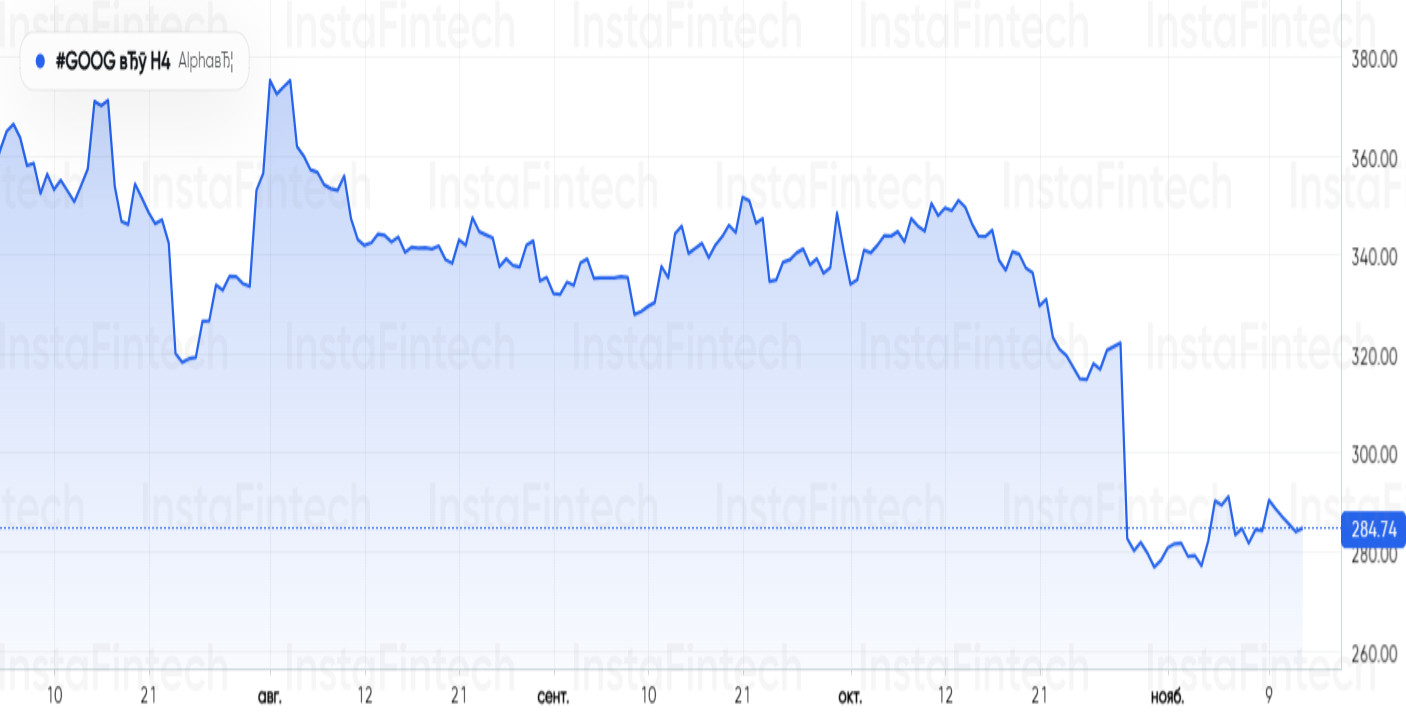
According to Google, Carbon uses more tokens for chain-of-thought reasoning and self-checking. In the Gemini app, Argon is labeled "Code & Analysis," while Carbon is marked "Most complex tasks." With Carbon's release, Gemini 3.1 Pro has been removed from the app.
The model launch is paired with new tooling: Antigravity's preview now includes a /swarm command that turns a single prompt into a "coordinated team of agents," whose activity can be monitored in real time. Developers can assign Carbon to key roles — architecture design, audit — and combine it with lighter models to distribute workloads.
Benchmarks support Carbon's performance claims: per Google, the model leads on CursorBench 4.0, Perplexity's WANDR, and Zapier's AutomationBench, while its cost per task is reportedly more than two times lower than the nearest public competitor.
Google also expanded its free six-month research program to include academic researchers, giving scientists access to Carbon. On safety, the company says simulated cyberattack tests blocked 99% of attempted exploits.
Skeptics and the press urge caution: firms can cherry-pick favorable benchmark results, and Google is no exception. The Verge reminds readers that in prior head-to-head tests, Carbon lagged Fable 5.2 on some metrics. Still, analysts call Carbon's release a return of Google to the AI vanguard after a period in which Anthropic and OpenAI held the lead.


